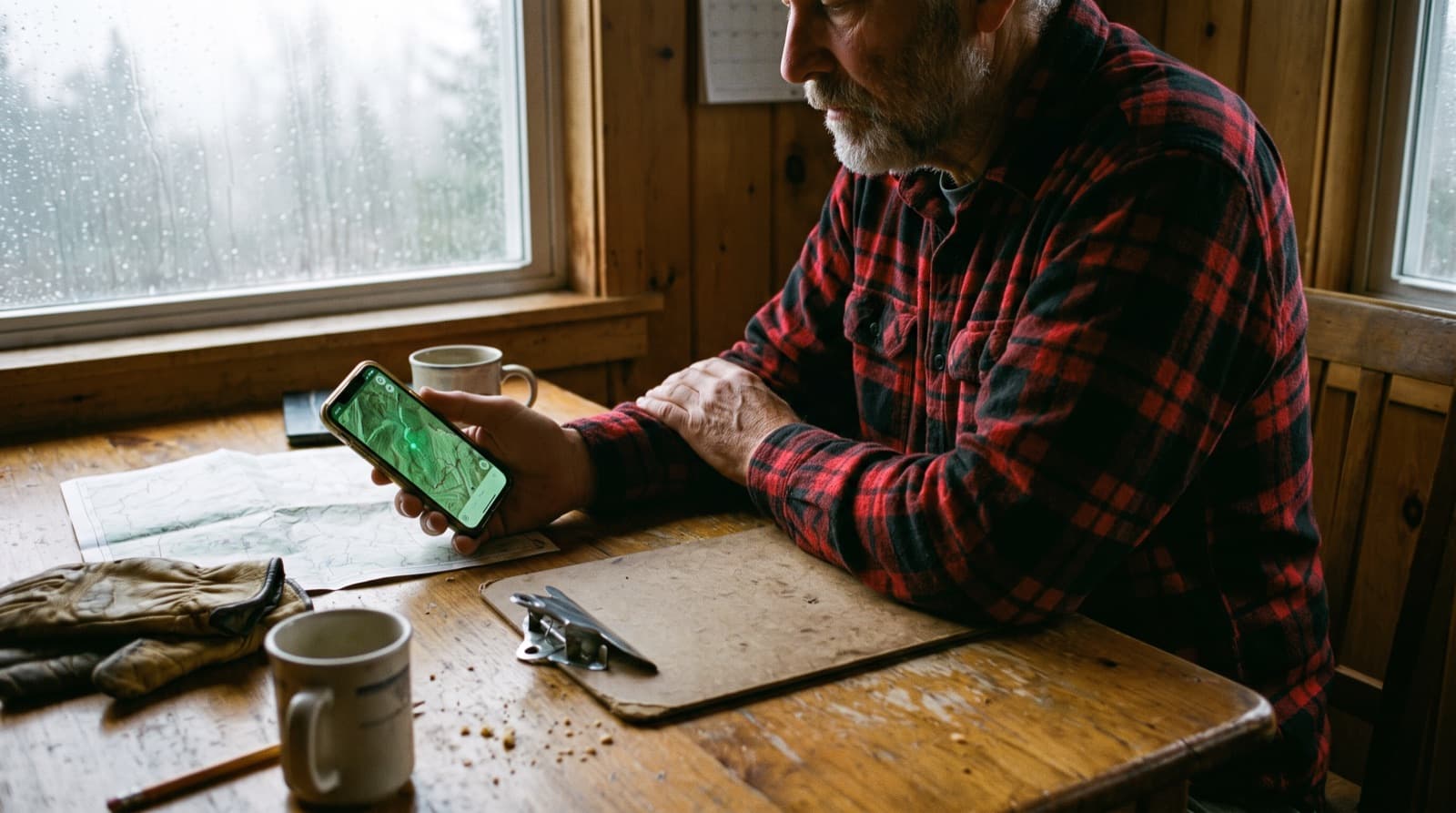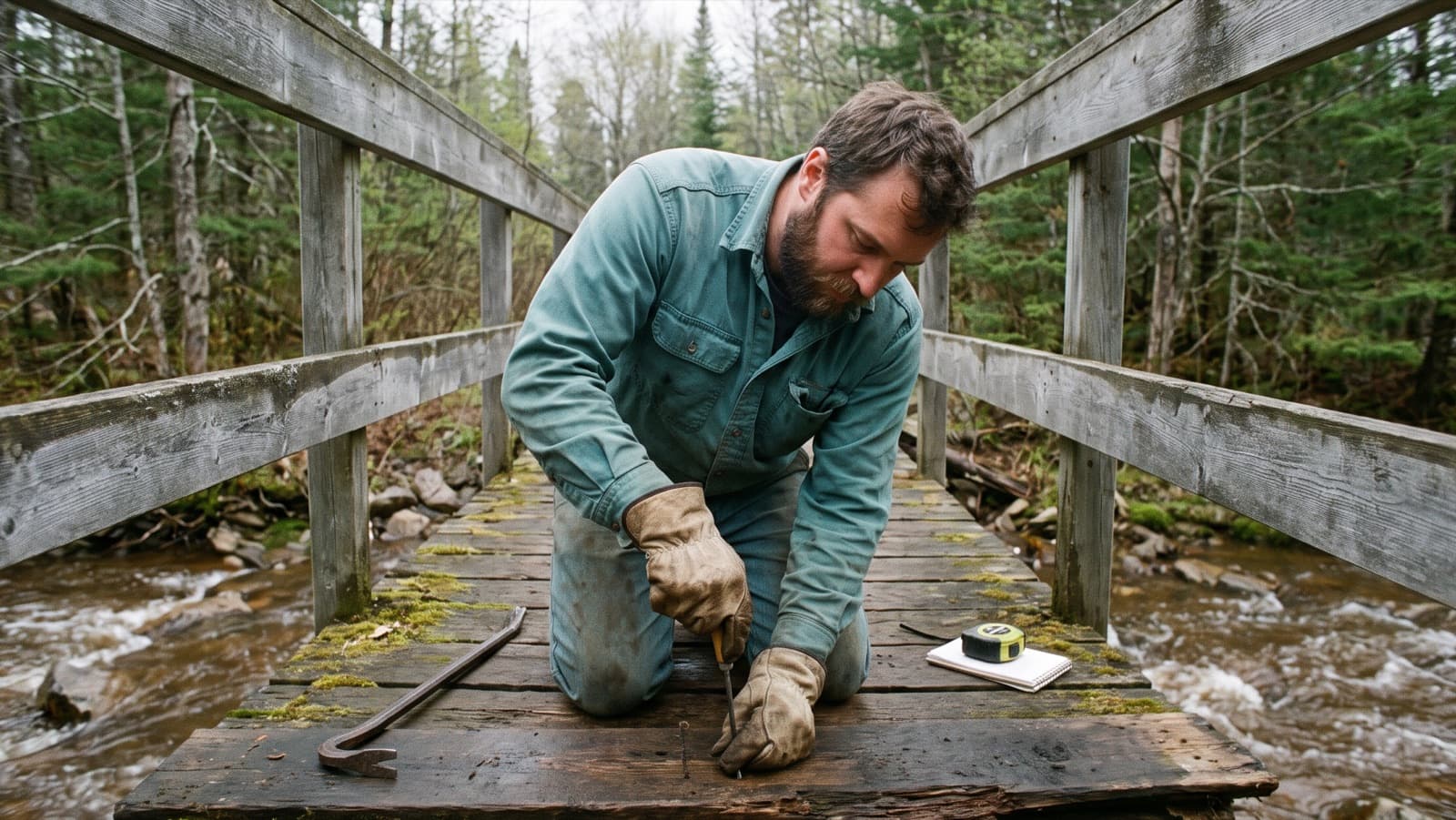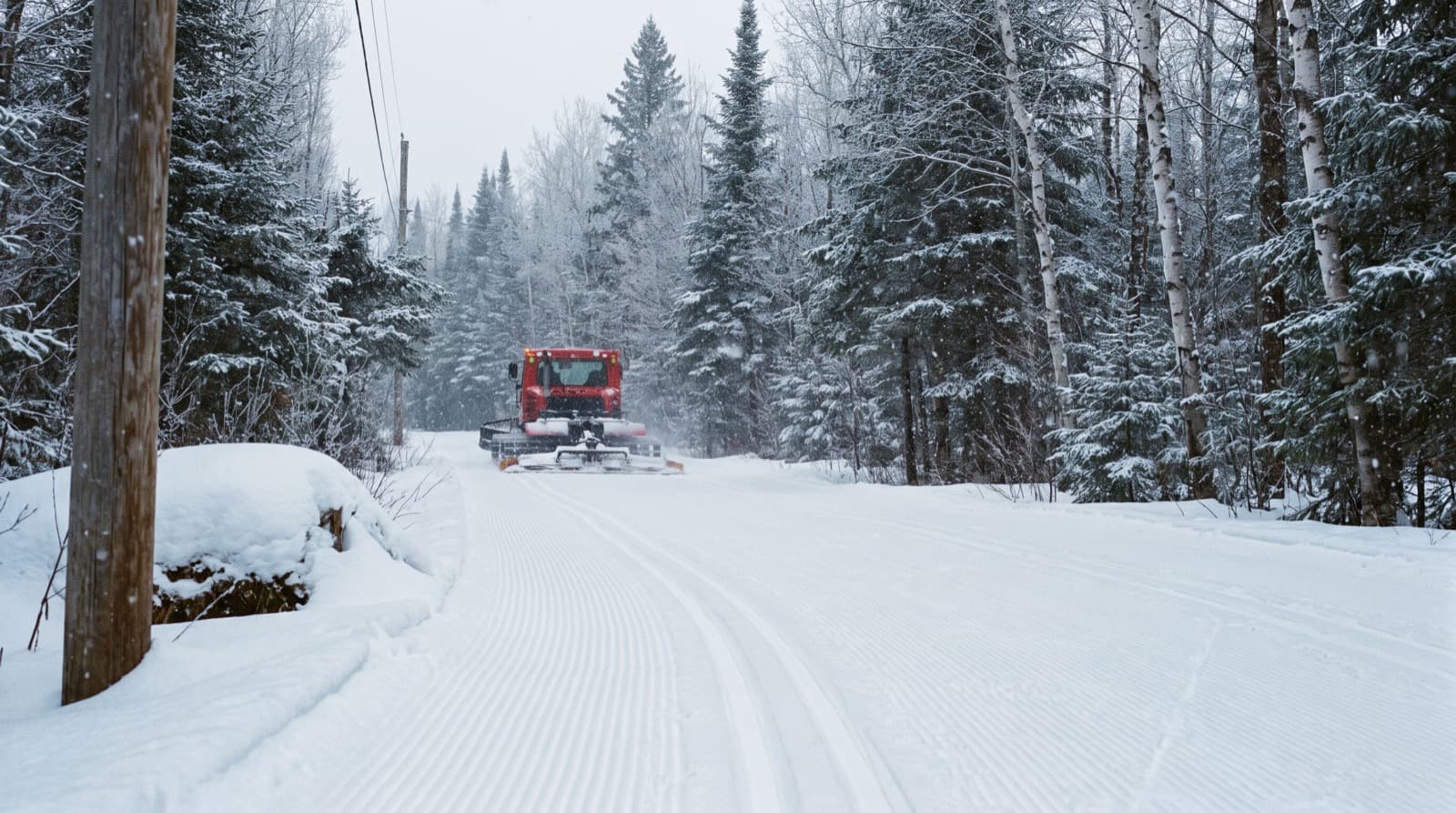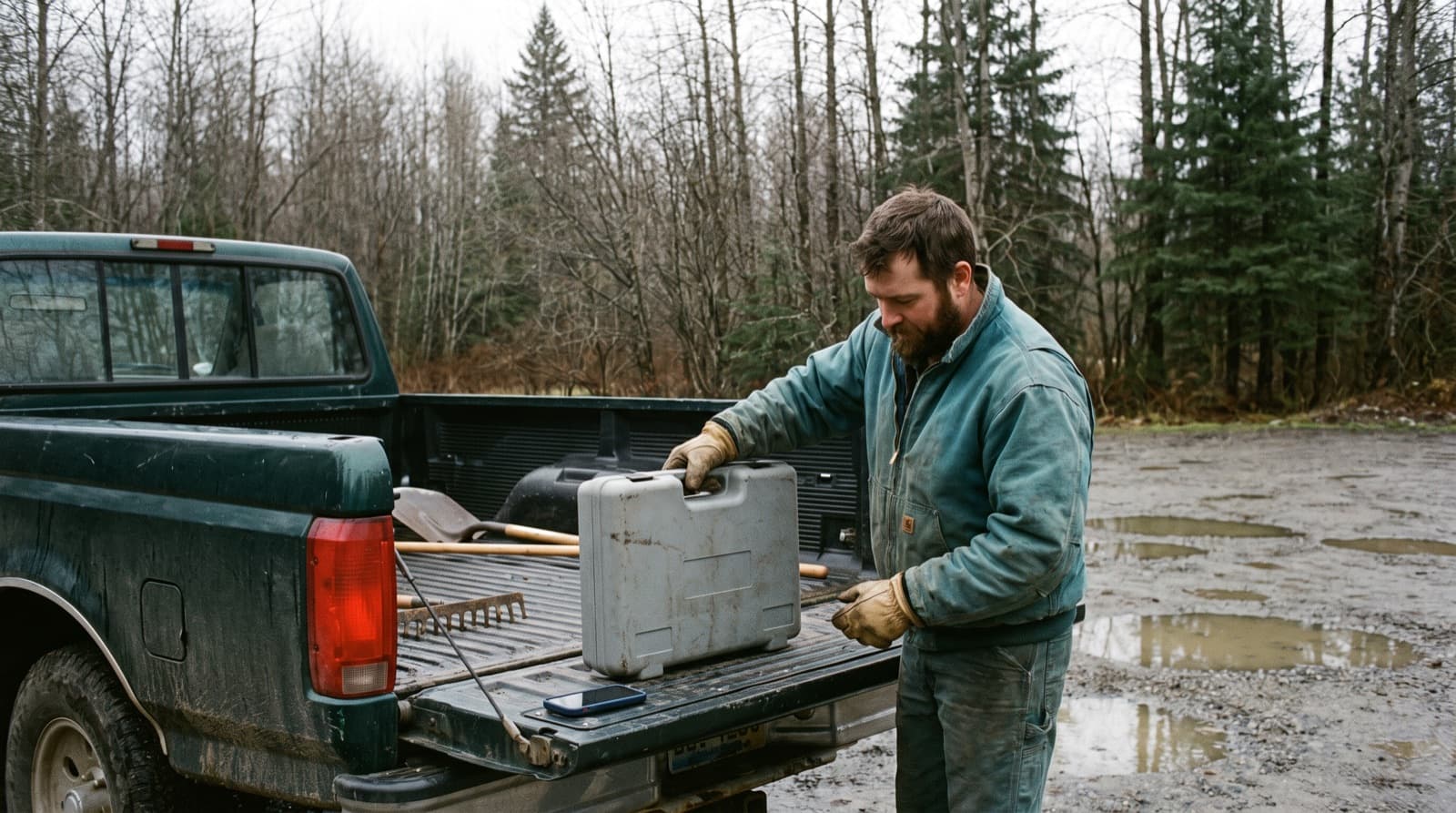
There's more work on trails than hours to do it, and the gap is growing. In 2012, the US Forest Service did any maintenance at all on only about 37% of its 158,000 miles of trail (GAO). An internal report from December 2025, covered by High Country News, puts miles maintained 22% below average, a fifteen-year low.
In Canada, it's volunteer hours that are falling. According to Statistics Canada, the share of people who volunteer with an organization went from 41% in 2018 to 32% in 2023, and hours given to sports and recreation dropped 34%.
When hours are scarce, a trip that accomplishes nothing is expensive. This article is about having fewer of them.
What a wasted trip costs
Take a 60-mile round trip. At the IRS standard business mileage rate of 72.5 cents a mile for the first half of 2026 (IRS), the drive alone comes to $43.50. Add two volunteer hours: Independent Sector values a volunteer hour at $36.14 for 2025.
These aren't invoices, they're benchmarks. They put a number on the trip where you find out the bridge was already fixed, or that nobody brought the tool needed to fix it.
Why outings fail
The causes come up again and again, and they rarely have anything to do with how willing the crew is.
First, the information is scattered. In a Penn State geospatial capstone project, Todd describes trail data stored in random files and spread across multiple volunteers (Todd, 2014). He also notes that volunteers often forget to report problems, and that problems reported later are described less accurately.
Then, reports often arrive without a location. The Wildlands Conservancy in Pennsylvania received its volunteers' reports through an online form. Staff re-keyed them, and because the forms had no coordinates, someone had to go and find the problem in the preserve. In 2026 the organization switched to an app that records the location with the report (Wildlands Conservancy).
Things also get entered twice. In Acton, Massachusetts, the land stewardship committee looked at a public reporting app. Its members pointed out that a steward would still have to copy each issue into the committee's shared spreadsheet (meeting minutes, 2021).
Finally, not every report tells you what to do. The same committee worried about noise: "this is a muddy section" isn't a task.
Four habits that prevent most wasted trips
Record it on the spot, with a location and a photo
The best time to describe a problem is while you're looking at it. A GPS location and a photo answer the two questions the person going out to fix it will have: where exactly, and what to bring. That's exactly what the Wildlands Conservancy's forms were missing.
Sort with simple levels
Vélo Québec's inspection log puts each problem in one of three levels: urgent, priority or secondary. Three levels are enough to decide what goes out this week and what waits for the next trip to that sector.
Group by sector
Once problems are on a map, you can see which ones are close together. Three small jobs in the same sector make one trip instead of three. Grouping works better when each report says what materials are needed, which the old Québec hiking federation guide already asked crews to note: labour, materials, estimated time (FQM, 2004, in French).
Close the loop in writing
Finished work should leave a record: what, where, when, by whom. Vélo Québec points out that an inspection log keeps track of reports and the actions taken, and over time becomes a record of the organization's diligence. Rails-to-Trails Conservancy gives the same advice: regular inspections, documented along with the fixes made, provide a sound defense if an accident happens (RTC). The record also helps the next person, who won't drive out to fix a bridge that's already been fixed.
Public reports: useful, if someone sorts them
In France, the national hiking federation runs Suricate, a system that lets trail users report problems. It received more than 4,000 reports in 2020, 72% of them about trail marking, signage or the environment (FFRandonnée, 2021, in French). In the summer of 2024, 1,358 people sent 2,367 reports, up 43% (FFRandonnée, 2025, in French).
Trail users are happy to report. The work shifts to sorting, which is exactly what worried the Acton stewards: you need someone, and somewhere, to decide what becomes a task.
What a tool won't fix
Australian mountain bike club leaders interviewed by Flow Mountain Bike describe another bottleneck: admin always lands on the same few people, and "most people will choose to ride" (Flow Mountain Bike, 2026). A tool can lighten that load or add to it. The question to ask before adopting one: does it remove a step of data entry, or add one?
In Sentinel
In Sentinel, a problem gets reported from the map in the mobile app, with the photo and location, even without signal. Public reports come in without an account into an inbox to sort, and what you keep becomes a task on the map. Each task has a priority, a person or group assigned, and keeps its history. Planning shows who's doing what this week.
Sources
- Government Accountability Office, Forest Service Trails, GAO-13-618, 2013; High Country News, The nation's trails are disappearing, 2026.
- Statistics Canada, Volunteering and charitable giving in Canada, 2018 to 2023, 2025.
- IRS, Standard mileage rates; Independent Sector, Value of Volunteer Time, 2026.
- D. Todd, GEOG 596B capstone, Penn State, 2014.
- Wildlands Conservancy, New GIS App Streamlines Adopt-a-Preserve Reporting, 2026; Acton Land Stewardship Committee, minutes of February 16, 2021.
- Vélo Québec, Journal d'inspection et méthodologie de l'entretien, 2025; Fédération québécoise de la marche, Aménagement, évaluation et entretien des sentiers pédestres au Québec, 2004 (both in French).
- Rails-to-Trails Conservancy, Rail-Trails & Liability, 2000.
- FFRandonnée, Bilan des signalements Suricate en 2020 and Suricate : des chiffres en hausse en 2024 (in French).
- Flow Mountain Bike, Battling burnout, 2026.