In Canada, the share of people who volunteer with an organization fell from 41% in 2018 to 32% in 2023. Hours given to sports and recreation dropped 34%, and the top 10% of volunteers now give 61% of all hours (Statistics Canada). In the US, the formal volunteering rate recovered to 28.3% in 2023 after the pandemic, but each volunteer gives less time: 70 hours a year on average, down from 96.5 in 2017 (Census Bureau).
For a club or an outdoor center, that means one thing: you can't count on two or three people doing everything anymore. You need a structure that spreads the work. Several large trail organizations have written theirs down; this article sums up what they have in common. Sources are at the end.
A designated leader for every outing
The Appalachian Trail Conservancy's (ATC) safety policy comes down to one basic rule: every work party has a designated leader (ATC).
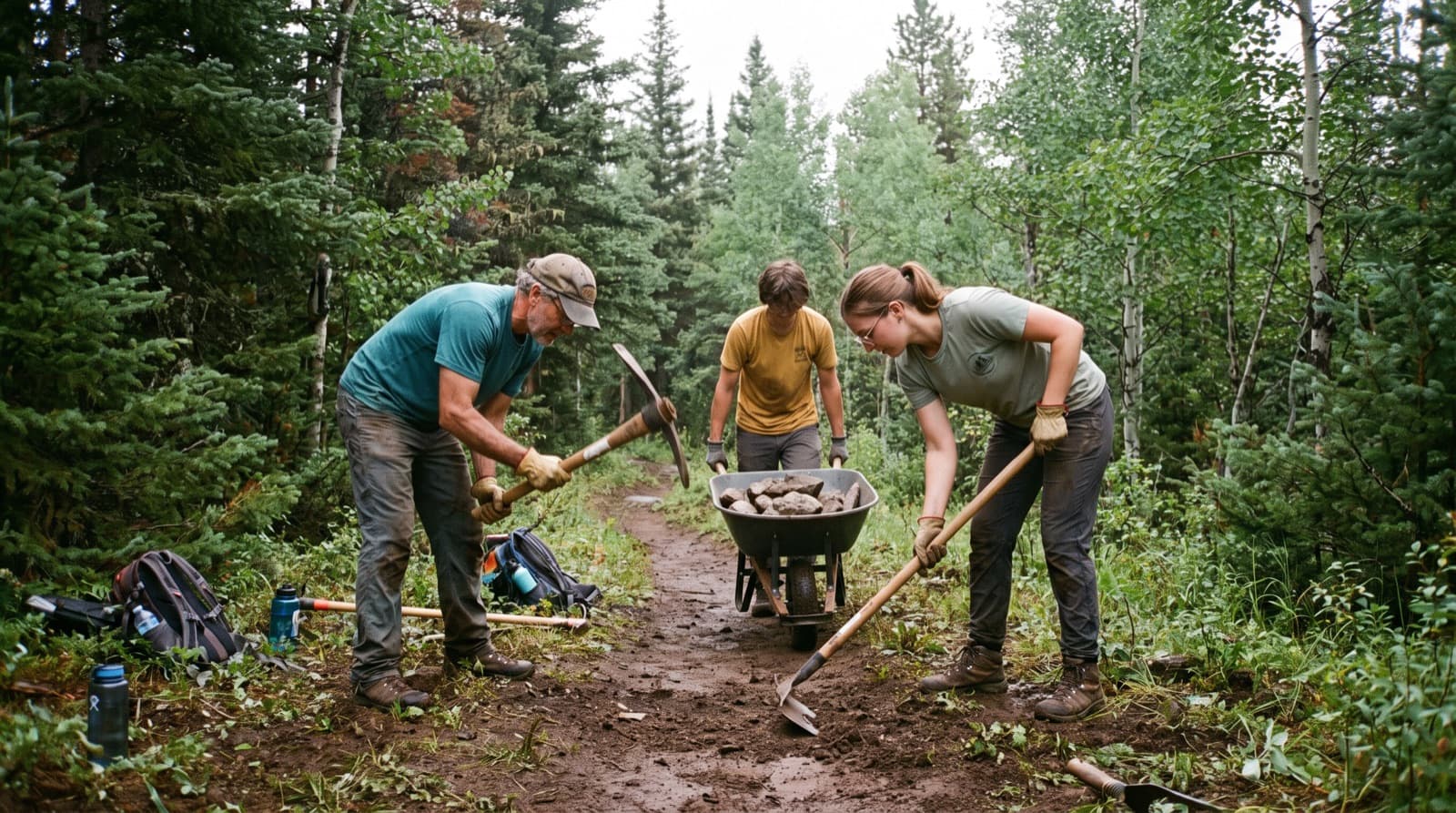
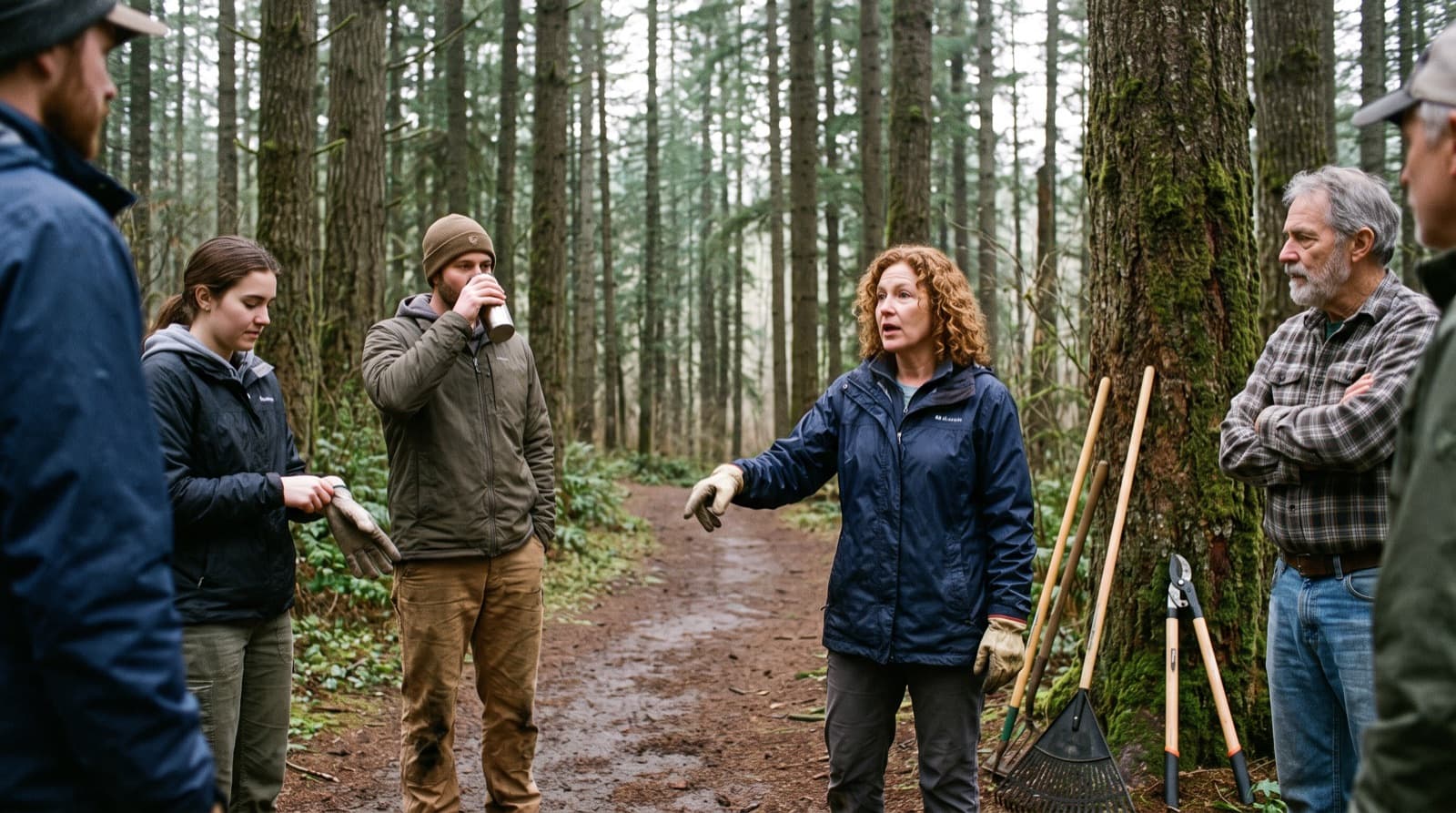
The Washington Trails Association (WTA) built its whole program around that role. It trains crew leaders and assistant crew leaders; the basic training takes about an hour and a half, emergency training has to follow within six months, and two references are required. Assistant crew leaders are also how WTA grows its next leaders (WTA).
For a small club, the benefit is simple: on the day the founder can't make it, someone else knows how to run the outing.
One section per person
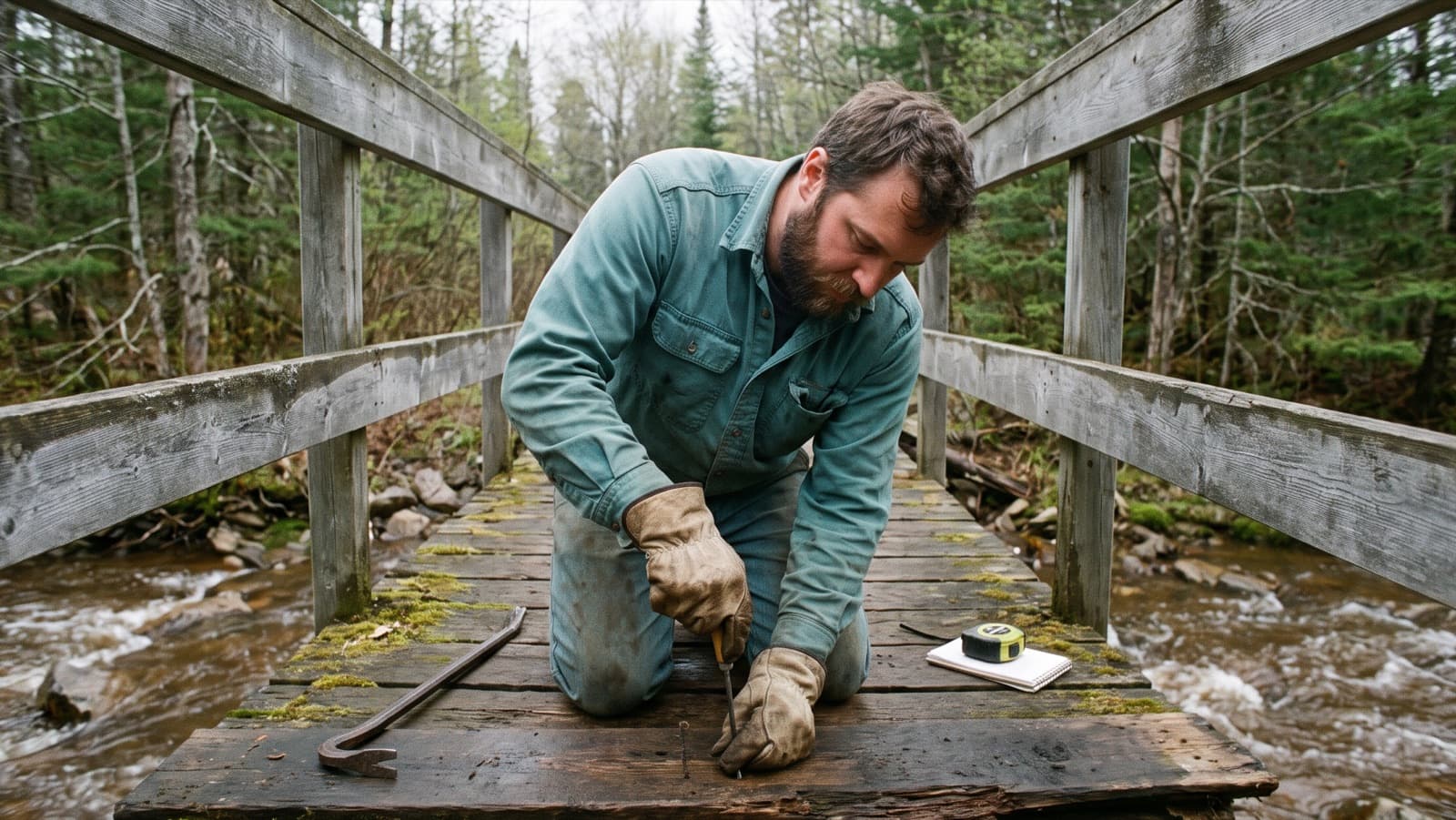
The second idea shows up everywhere: give a specific piece of the network to a specific person. At the ATC, each maintainer usually looks after about a mile of trail. The role template asks for at least four person-days a year per mile, three or four visits, a two- to three-year term, and lets the supervisor reassign a section (ATC).
The Prescott National Forest adopt-a-trail program in Arizona asks adopters to work at least four times a year and to get first aid and CPR training within six months, and the Forest Service visits each adopted trail once a year (USFS Prescott).
The Lang Hastings Trail in Ontario splits the job into two roles: monitors who walk their segment every week and report what they see, and stewards who do the upkeep (Lang Hastings Trail). For a small organization, that's a good way in: being a monitor takes no tools and no technical training.
Safety: what's written down, and what isn't
On chainsaws, the rules are clear and consistent. The National Park Service requires at least two people for any chainsaw operation (NPS), as does the Pennsylvania Parks & Forests Foundation, which also requires at least ten hours of training (PPFF). At the ATC, sawyer certification renews every three years and first aid and CPR every two (ATC). The club's saw coordinator tracks expiry dates, runs mentoring and puts together storm response crews.
For work without a chainsaw, we didn't find a minimum crew size in the guides we read. The ATC lets a maintainer work alone on their section as long as they follow a check-in/checkout procedure: someone knows where they are and when they're due back (ATC). It's an easy rule to adopt, even in a small club.
Bringing new people in
The New York-New Jersey Trail Conference asks its supervisors to walk the trail with every new maintainer before they work alone (NY-NJ Trail Conference). In Prescott, new adopters watch a crew leader run a project day. In France, the national hiking federation rebuilt its trail marker training in 2024: prerequisites, an online module, then two days in person (FFRandonnée, in French).
Why volunteers come back
Two recent studies offer some clues, on small samples. Among 115 ATC crew volunteers, satisfaction with the social side of the work was the strongest predictor of how many weeks they volunteered; support from the organization predicted how many years (Trauntvein et al., 2018). Among 354 mountain bike trail builders in Denmark, four of the top five motives were about others rather than themselves (Arvidsen et al., 2023).
In Québec, a 2025 survey by the provincial volunteer network (RABQ) and Léger found that volunteers give 10.2 hours a month on average and that 45% were recruited by word of mouth; the RABQ concludes that organizations need to offer more flexible schedules (Observatoire québécois du loisir, in French).
There's a flip side. Australian mountain bike club leaders interviewed by Flow Mountain Bike in 2026 describe admin work that always lands on the same few people; one notes that mandatory volunteer registration and training made maintenance harder to organize (Flow Mountain Bike). The US Government Accountability Office reported the same tension in 2013: Forest Service staff said "volunteers aren't free", and some forests turned volunteers away because they lacked the staff to supervise them (GAO).
Budget the coordinators' time
The ATC estimates the time its coordination roles take: about 25 hours a month for a trail supervisor, 3 to 12 hours a quarter for a saw coordinator. Numbers like these help you describe the role honestly to the person you're recruiting, and show you when it's time to split it.
In Sentinel
In Sentinel, each member has a role that sets what they can see and change, and you can assign work to a group rather than a single person. Planning shows who's doing what this week. Time is logged on the task, for a whole crew in a single entry (Log time on a task), and work roles give each trade an hourly rate, volunteers included.
Sources
- Statistics Canada, Volunteering and charitable giving in Canada, 2018 to 2023, 2025.
- US Census Bureau, Civic Engagement and Volunteerism, 2024.
- M. Fournier, Le bénévolat : en pleine transformation, mais toujours essentiel, Bulletin de l'Observatoire québécois du loisir, 2026 (in French).
- Appalachian Trail Conservancy, Trail Crew Safety and Skills Training, Section Maintainer, A.T. Sawyer Program, Check-In/Checkout Policy.
- Washington Trails Association, Volunteer leadership.
- US Forest Service, Adopt-A-Trail Manual, Prescott National Forest, 2019; National Park Service, chainsaw job hazard analysis.
- Pennsylvania Parks & Forests Foundation, Chain Saw Safety Guidelines, 2024.
- New York-New Jersey Trail Conference, Best Practices; Lang Hastings Trail, Volunteer; FFRandonnée, Les formations Itinéraires évoluent en 2024 (in French).
- Trauntvein et al., Place Attachment and ATC Volunteer Involvement, International Journal of Volunteer Administration, 2018; Arvidsen et al., Why build mountain bike trails?, Journal of Outdoor Recreation and Tourism, 2023.
- Flow Mountain Bike, Battling burnout, 2026; Government Accountability Office, GAO-13-618, 2013.