Sentiers du Moulin is in Lac-Beauport, 20 minutes from Quebec City. In summer, more than 70 km of mountain bike trails there need constant attention. In winter, the same land hosts cross-country skiing, fatbiking and snowshoeing (Sentiers du Moulin).
In a LinkedIn post, the team summed up its job in one sentence:
"A mountain bike network is about much more than the number of kilometers on a map."
This case study follows what they described there: the work to do before opening, the decisions to make during the season, and how they stay organized so nothing gets lost along the way. Quotes are translated from French.
Before opening: the whole network to review
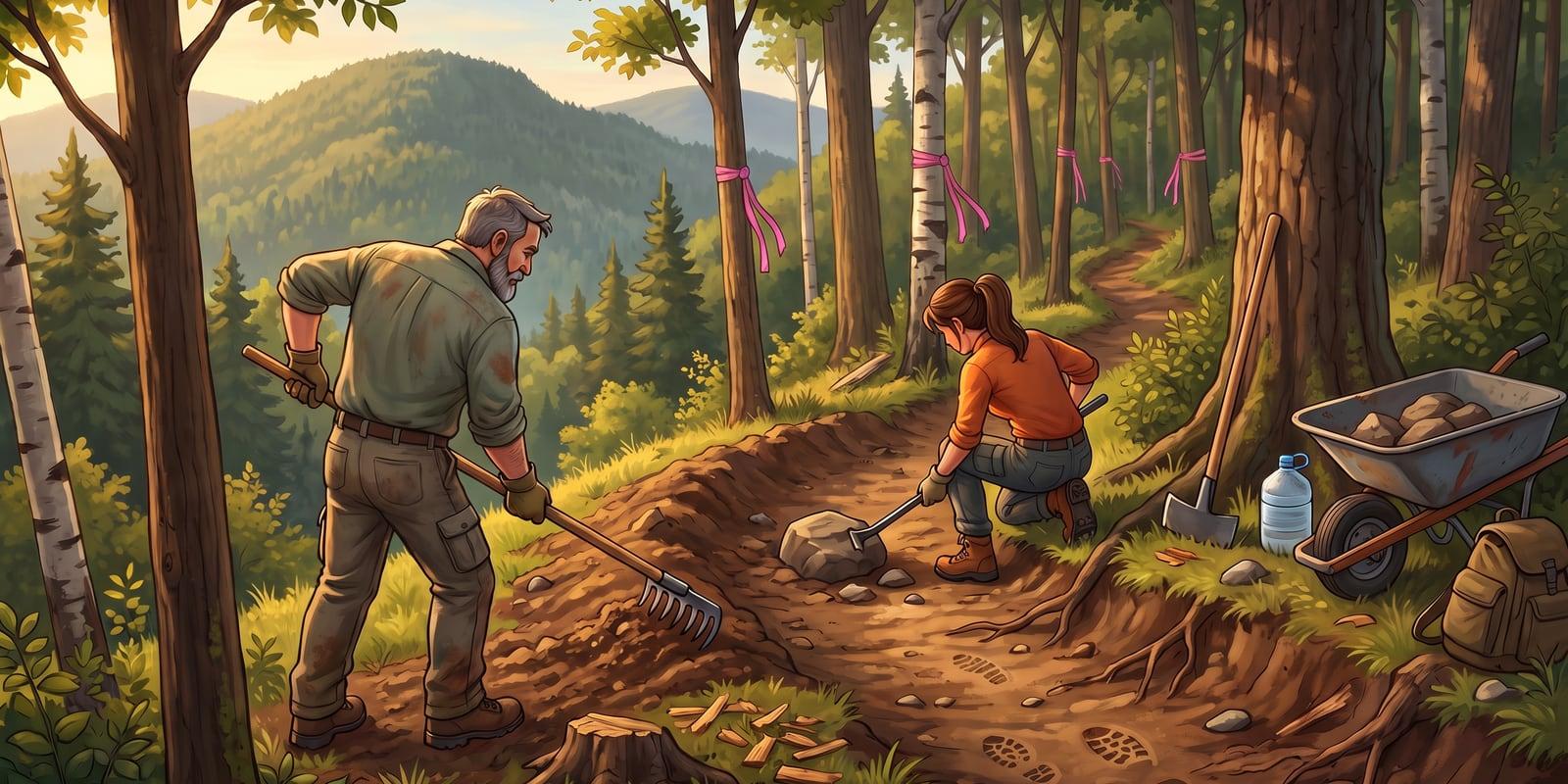
The spring thaw leaves its mark all over the network. Before opening, the Sentiers du Moulin crew has to:
- inspect the trails;
- check drainage and structures;
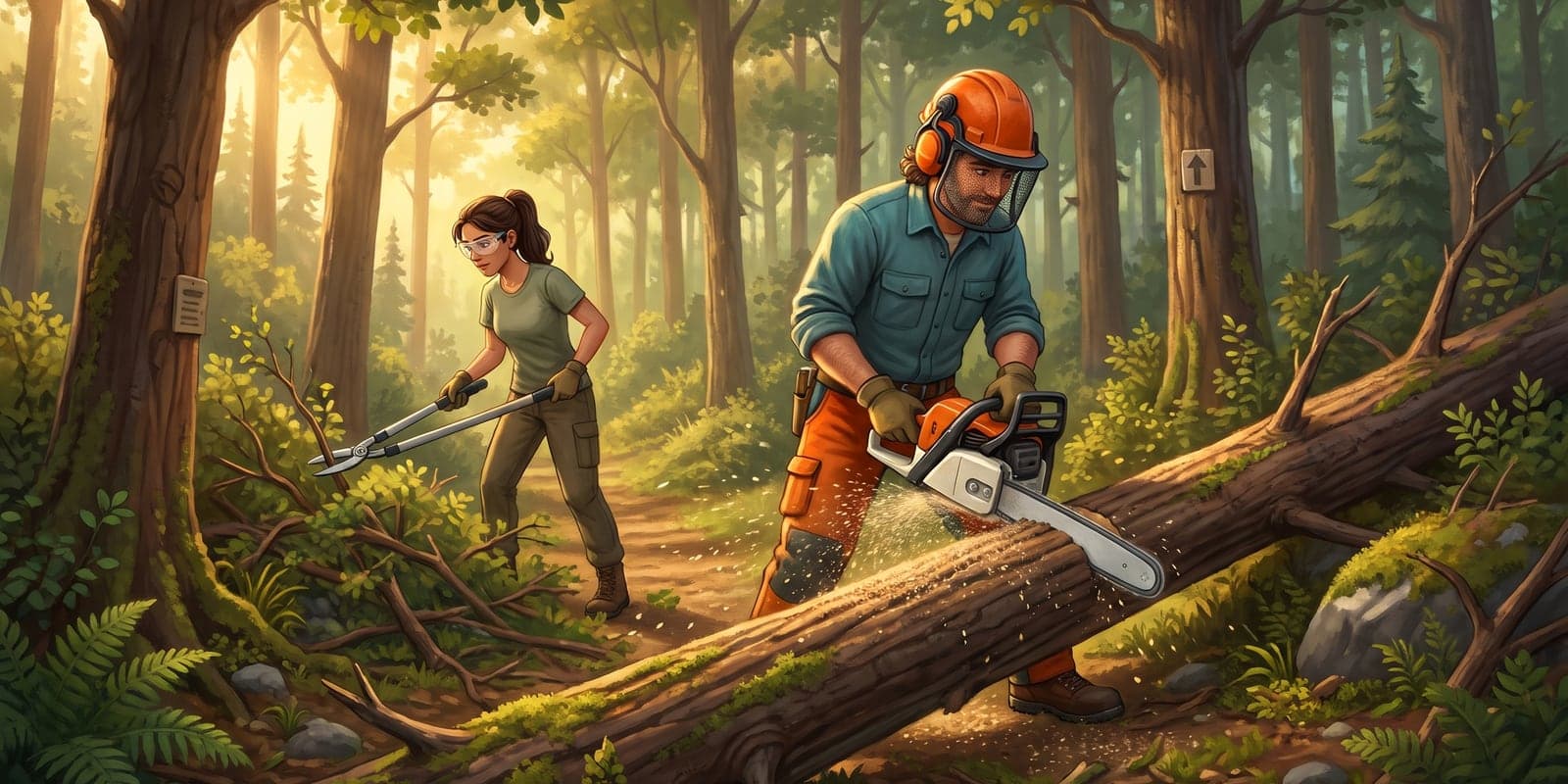
- clear the corridors;
- get the signage ready;
- rebuild sections damaged by freeze-thaw cycles.
On 70 km, each of those lines can turn into dozens of specific findings: a clogged drain, a cracked plank on a boardwalk, a tree leaning over the corridor, a sign on the ground. Seeing them is not the hard part. The hard part is not losing them between the moment someone notices and the moment a crew comes back with the right tools.
For bridges, boardwalks and features, our guide to trail structure inspection covers what to look at and how often. For signs, see the trail signage guide.
During the season: priorities that keep moving
Opening day settles nothing for good. As the team puts it:
"During the season, weather, wear and traffic bring new priorities."
A heavy rain gouges a descent, a busy section gets wider, a tree comes down the day before a busy weekend. Each time, someone has to decide where to work, with what resources and when. And sometimes, a trail has to close for a while to protect riders or the ground.
"Not everything gets fixed in a single work day."
This is where a fixed work list shows its limits. Monday's priorities are no longer Thursday's, and a decision to close a trail has to reach riders quickly. In Sentinel, that decision goes through trail conditions, which riders check before heading out.
A versatile crew and experienced volunteers
At Sentiers du Moulin, this work relies on a versatile field crew, backed by experienced volunteers, and on good coordination between the center's different departments.
The model is common across trail networks, and it has its demands. Volunteers are not there every day. They need to find what needs doing quickly, and staff need to know what was done without a string of calls and messages. Our article on how to structure a trail team goes deeper into splitting the roles, and the one on volunteer hours explains why they are worth counting.
What Sentinel changes day to day
The team describes how it uses Sentinel in four moves:
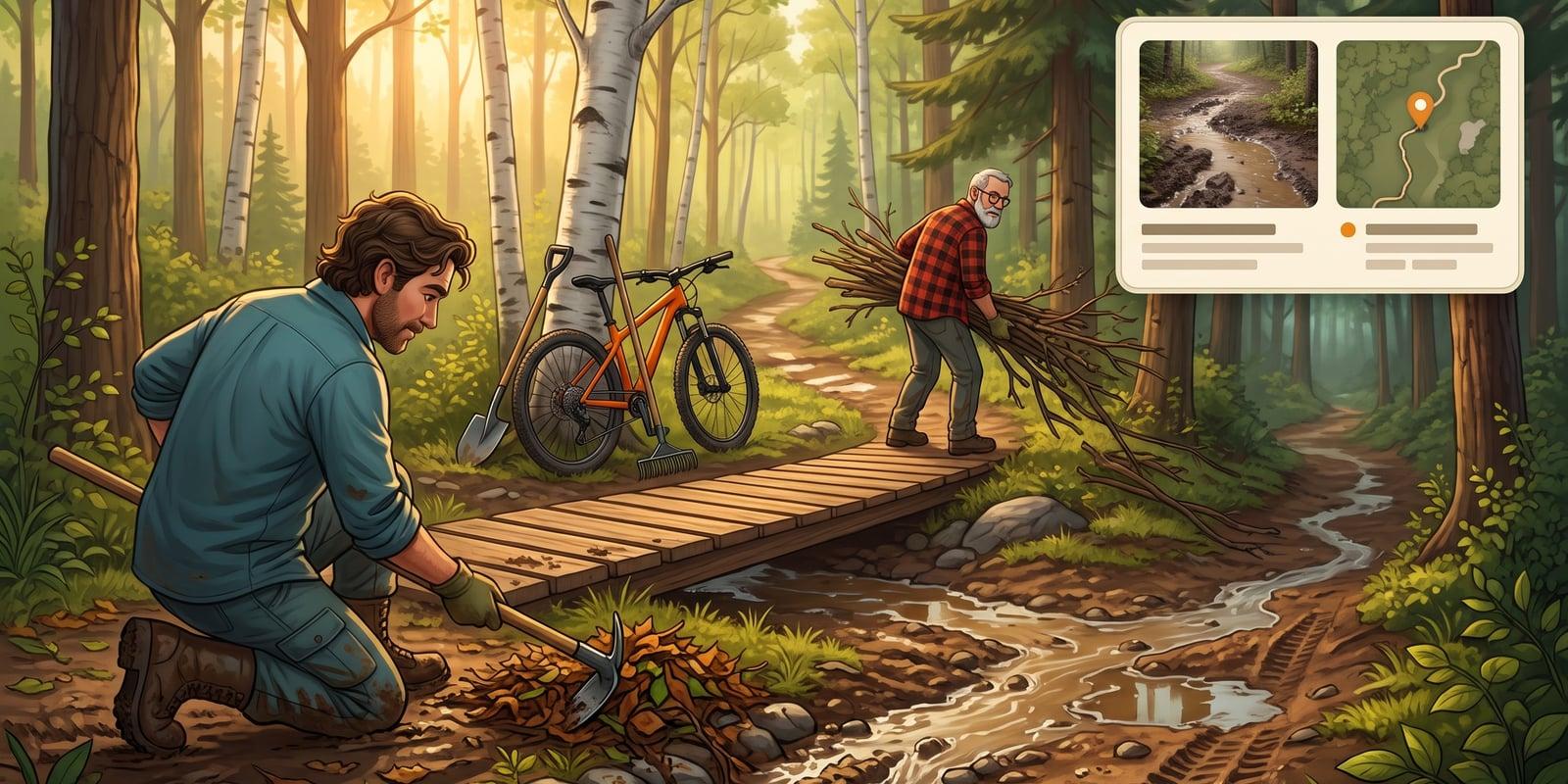
"In practice, Sentinel lets us pinpoint problems directly on a map, document the work with photos, set priorities and track how the work is progressing."
In the app, each problem becomes a task pinned to the exact spot where it was seen. The photo taken on site shows the size of the job before anyone goes back, and then the finished work. The priority says what comes first when the weather upsets the plan. Progress shows everyone what is done, under way or waiting.
"It is a way to centralize information and make team coordination easier, even when we are out in the field."
The field part matters a lot. In a trail network, there is not cell service everywhere. The mobile app works even without a signal: you log the problem where it is, and it syncs when you get back.
A tool born on this network
Sentiers du Moulin is not a customer like the others. Francis Lessard, who develops Sentinel, volunteers there, and the idea for the tool came from this network (About). The team tells it this way:
"Sentiers du Moulin took part in the earliest testing stages of the platform. We shared our work methods, defined our needs and tested the tool before its launch. Today, Sentinel is part of our daily routine."
What to take away
The Sentiers du Moulin post ends on an idea you rarely hear in the field:
"New builds naturally draw attention. Yet an essential part of our work is preserving the quality of what already exists."
A new trail gets talked about when it opens. In the years that follow, maintenance decides whether it stays enjoyable and sustainable. That work is hard to see, which is exactly why it needs to be logged, prioritized and tracked. Our trail maintenance guide goes further into what it takes, season after season.
Sources
- Sentiers du Moulin, LinkedIn post "Gérer plus de 70 km de sentiers : un défi quotidien" (Managing more than 70 km of trails: a daily challenge), 2026. Quotes translated from French and reproduced with the organization's permission.
- Sentiers du Moulin, official website: location, network and activities.